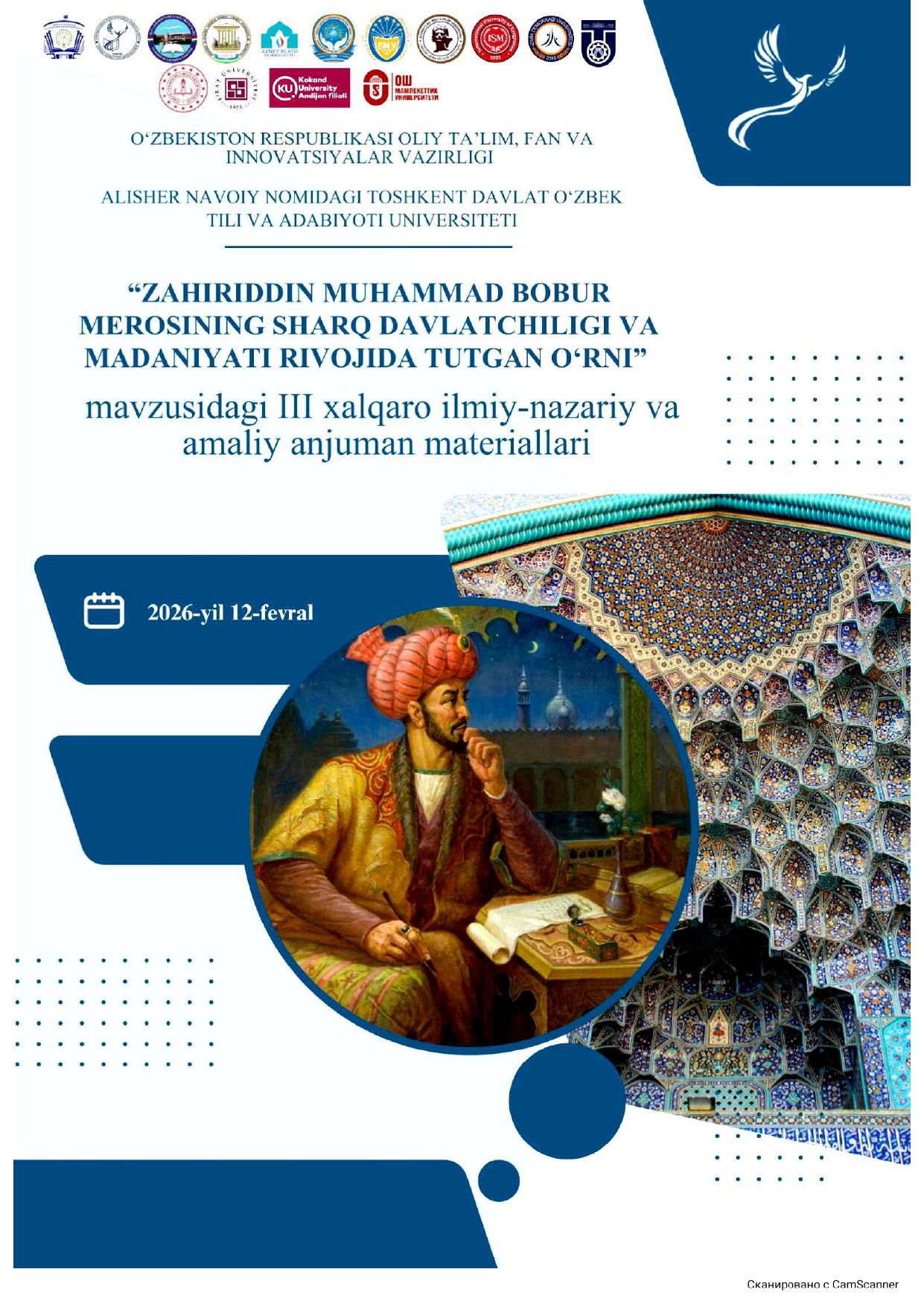
БАБУР КАК СИМВОЛ СОЕДИНЕНИЯ РАЗЛИЧНЫХ КУЛЬТУРНЫХ ТРАДИЦИЙ: ОТ ТУРКЕСТАНА ДО ИНДИИ
Ключевые слова:
Cultural heritage, cultural fusion, cultural exchange, intercultural connections, Eastern statehoodАннотация
The article is devoted to the analysis of Z.M. Babur’s personality as a symbol of the integration of various cultural traditions spanning the territories from Turkestan to the Indian subcontinent. From a historical and cultural perspective, Babur became a key figure who played an important role in the integration and mutual influence of different peoples, languages, religions, and customs. He was not only a military leader but also a person genuinely interested in cultural diversity, which was reflected in his governance and personal life. The article examines various aspects of cultural exchange and the blending of traditions that occurred against the backdrop of his conquests and diplomatic efforts. Babur not only strengthened political ties between different regions but also actively promoted the introduction of cultural elements, such as Persian poetry, Turkmen traditions, and Indian artistic forms, into every aspect of his state. Special attention is given to his personal experience of living among diverse cultures, which contributed to the formation of a unique cultural bridge between Central Asia and India. The study also explores the significance of the Babur-nama (his autobiography), which has become an important source for understanding cultural interactions and traditions, and demonstrates how Babur perceived these various cultural elements and used them to create a harmonious society that became the foundation for the future Mughal dynasty. Thus, Babur appears not merely as a conqueror but as a cultural mediator whose legacy continues to influence the development of arts, literature, and political thought for several centuries.