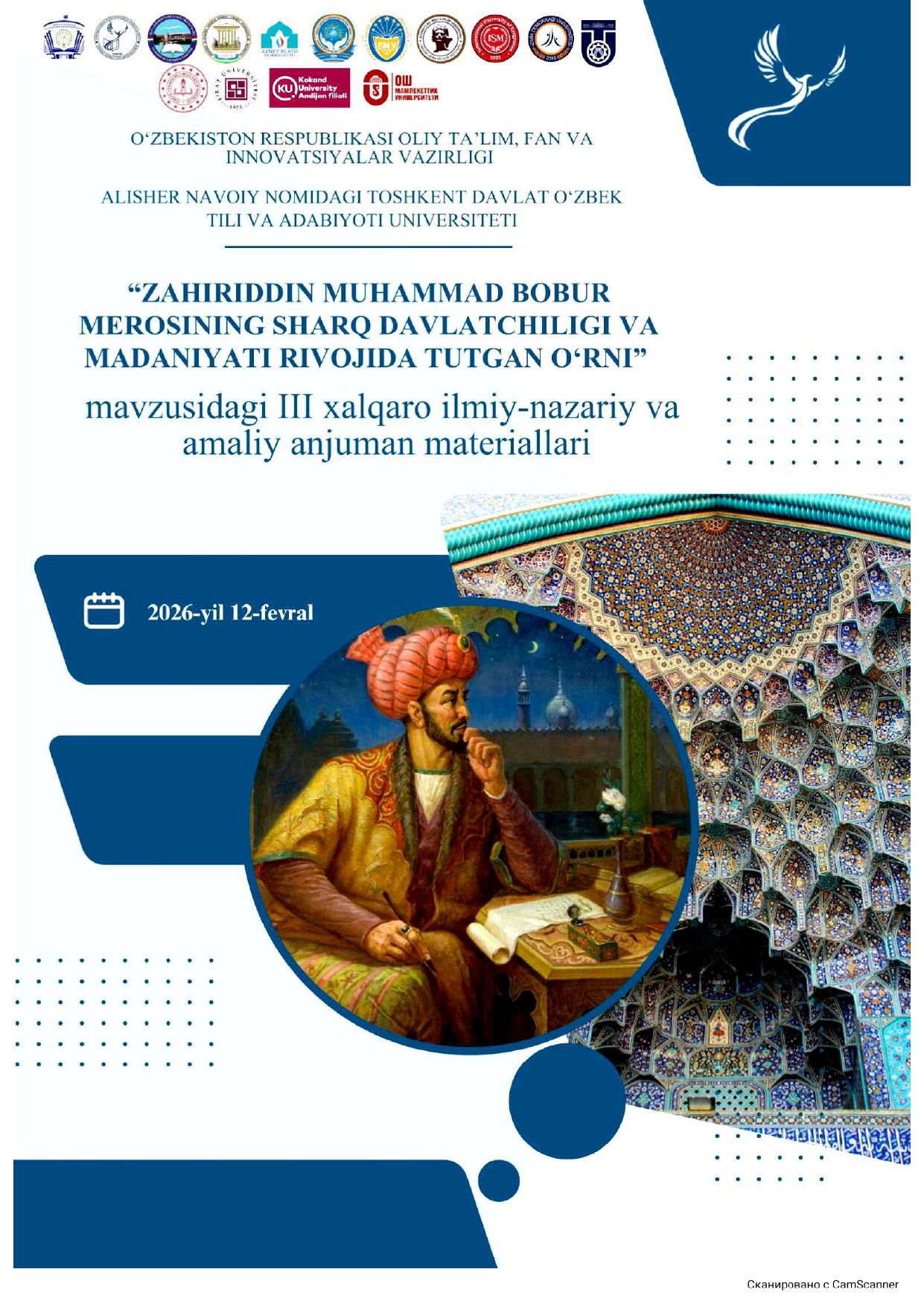
“BOBURNOMA”DA SODDA GAPLARNING SHAKLIY VA MAZMUNIY AKS ETISHI
Ключевые слова:
Baburnama, Zahiriddin Muhammad Babur, simple sentence, formal representation, semantic representation, syntax, predicate, predicativity, government, agreement, adjacency, izofa, Persian-Tajik influence, Uzbek language syntax, linguisticsАннотация
The article examines the linguistic and syntactic features of Zahiriddin Muhammad Babur’s work Baburnama, with particular emphasis on the formal (grammatical structure, means of syntactic linkage – government, agreement, adjacency, izofa) and semantic (predictivity, the central role of the predicate, the relationship between subject and predicate) aspects of simple sentences. It provides a comparative analysis of the characteristics of the language of Babur’s era (influence of Persian-Tajik, emergence of subordinate clauses and new word combinations) alongside the elements of stability and change observable in the modern Uzbek literary language
Загрузки
Опубликован
2026-03-28