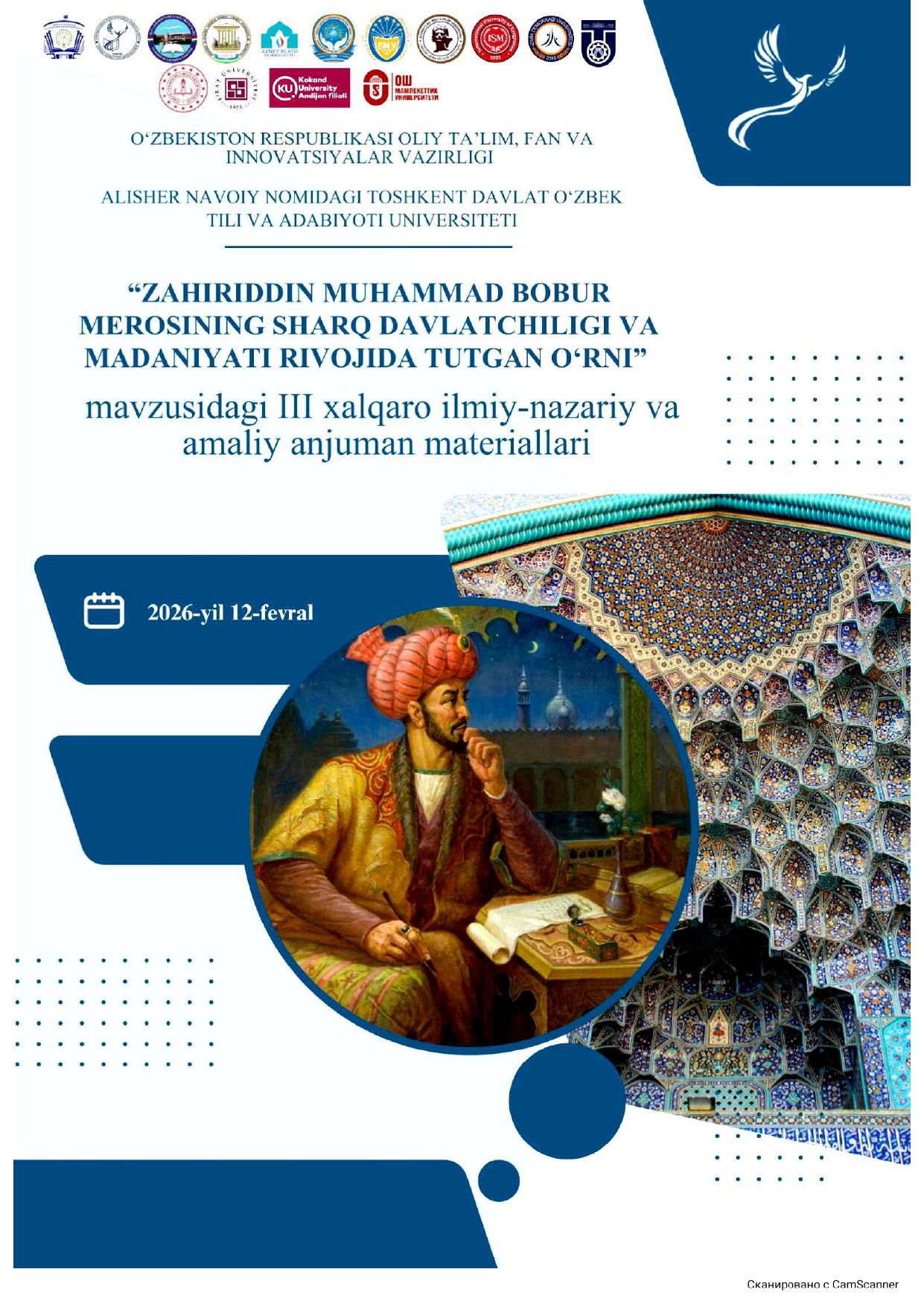
ZAHIRIDDIN MUHAMMAD BOBUR MEROSINING SHARQ DAVLATCHILIGI VA MADANIYATI RIVOJIDA TUTGAN O‘RNI
Keywords:
Zahiriddin Muhammad Babur, Boburnoma, Mughal Empire, Timurid traditions, Perso-Turkic cultural synthesis, Oriental statecraft, transcultural relations, centralized monarchy, religious tolerance, charbagh architecture, cultural exchange, Central Asia, South Asia, imperial historyAbstract
This article examines the role of Zahiriddin Muhammad Babur’s (1483–1530) heritage in the development of Oriental statecraft and culture. By transplanting Timurid traditions to South Asia and founding the Mughal Empire, Babur’s political pragmatism, military innovations (artillery and cavalry tactics), centralized monarchy model, and principles of religious tolerance shaped a new paradigm of Oriental statehood. Through the unique autobiographical style of “Boburnoma”, his poetic works, the transfer of the Timurid charbagh tradition to India, and transcultural exchanges (trade, Sufi migration, culinary synthesis), he significantly contributed to the expansion of the Perso-Turkic cultural synthesis. The study highlights the continued relevance of Babur’s legacy in imperial history, transcultural relations, and cultural synthesis processes, emphasizing the importance of its research and promotion in independent Uzbekistan for fostering patriotism and intellectual development among the younger generation